Proactive pest control is a valuable commitment for businesses, contributing to healthier workplaces and a sustainable future.
Protect your assets with rodent management plans and positively contribute to your local environment.
Keep your business web-free and looking its best with Proactive Pest.
Call 0274 PPS NOW

Office Hours:
Mon-Fri, 8am-6pm | Sat, 10am-2pm
Call 027 4 777 669


Rats are intelligent, quick learners and can take some time to approach new objects as they have a fear of new things (neophobia).
This can lead to them becoming trap shy fairly easily if not completed correctly.
Rodents can cause property damage, which can also lead to risk of fire or flood.
Or just a very expensive repair bill!
A rat population can swell from only two rats to over 1000 in as little as a year!
A female rat can have around 6 litters each year of around 5-10 pups, reaching maturity at just nine weeks old.
In rats they grow at a rate of up to 1mm daily or on average around 13cms a year!
Rodents need to keep teeth at a consistent length which is why they chew on your property – usually hard things such as your waterpipes!
There is a myth that rats chew at water pipes to get to water after eating bait.
This is not the case based in our experience – they have no trouble getting access to water, they chew because they must and will chew whatever is convenient – even our plastic stations.
Types of Rodents in NZ;
– Norway Rat
– Ship Rat
– Polynesian Rat (Kiore)
– House Mouse
Can you get rid of rats permanently?
There is no permanent way to eliminate rodents from a property without rodent control in place. Once removed there is nothing to stop the next another rat in the area moving in once territory is available. Often the problem lies over the fence.
Talk to your neighbour or surrounding businesses and get them on board and improve your results and protective perimeter.
Why do I need ongoing Rodent Management?
To ensure your property remains protected from rodents at all times this would require regular and ongoing rodent management onsite. This ensures that any invading rodents are taken care of before their presence has even been noticed!
Rodent Control Options
Ask us about our New Generation non-anti-coagulant baits with low avian (bird) toxicity.
We offer Rodent Management options to suit all requirements both residential and commercial including one-off plans or ongoing monthly management.
For best practice our rodent management plan visits are completed monthly, this is for safety reasons.
For long-term rodent control, long-term rodent management is generally recommended.
Internal Management and Monitoring
– including non-toxic options
Exterior Management
– including full perimeter management
We provide perimeter control options to provide greater protection to your property and buildings within. On larger sites, if wide enough this can help to keep property and buildings within virtually rodent free as we eliminate them at the perimeter line.
Proactive Rodent Management
– you can be reactive or you can get Proactive!
Many commercial operators should have a proactive IPM plan in place to ensure appropriate hygiene and health and safety is adhered to.
This includes but is not limited to food and dairy processing, butcheries, healthcare, hospitality and education and storage facilities.
Commercial clients may also want to do their part for birdlife in their area, such as tourism operators that showcase the beauty of NZ.
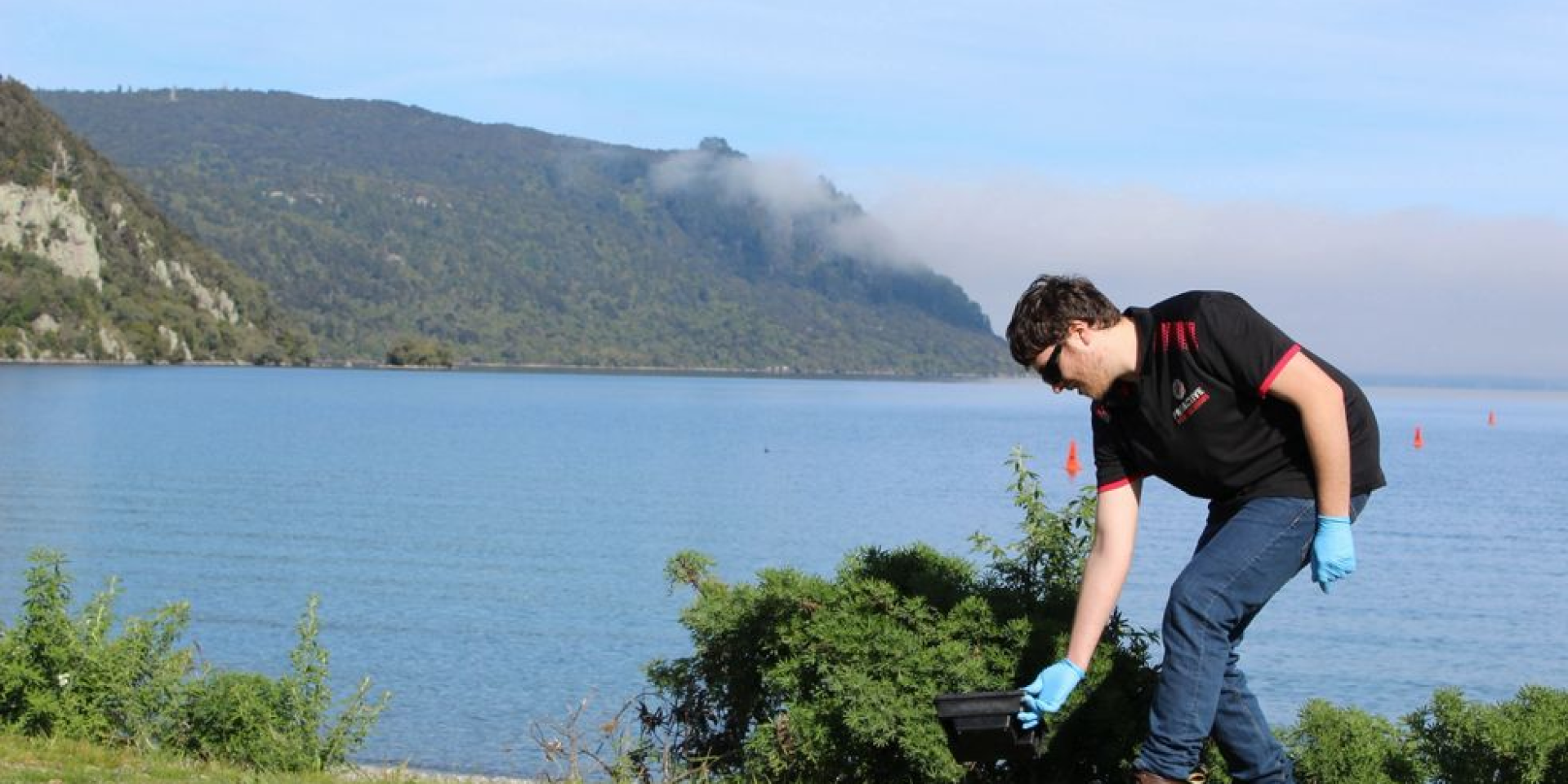
Many residential, rural and lakeside clients do proactive rodent management on their property purely to encourage and protect native species such as birds on their property.
Keep your property protected and do your part for birds
– It starts in your backyard!
Protect your home or business with professional spider-proofing services from PPS. Keep your building web-free and guarded against invading spiders and Whitetails today.
Benefits of Spider Treatment and Prevention
Maintains Property Cleanliness: Keeps your home or business building clean and presentable.
Prevents Surface Damage: Protects exterior paint and aluminum window frames from damage caused by acidic spider droppings.
Reduces Whitetail Spiders: Eliminates the main food source for Whitetails, reducing their presence around your property.
Whitetail Spiders in NZ:
Species: New Zealand has two introduced species of Whitetail spiders.
Appearance: Dark red or grey bodies with dark orange-banded legs and a distinct whitish tip on the tail.
Behaviour: Active at night, hunting other spiders for food, delivering a nasty bite and laying up to 90 eggs at a time.
Spiders and Whitetails in NZ: What You Need to Know
Spiders play a crucial role in the ecosystem, with New Zealand estimated to have over 2,000 species—including more than 150 jumping spider species alone. While most spiders are beneficial, they become pests when invading homes and leaving unsightly, damaging webs.
Exterior Treatment (Spiders & Crawling Insects)
Targeted Application: We apply an invisible, non-staining treatment to buildings, sheds, outdoor furniture, and letterboxes – wherever spiders and crawling pests like cockroaches prefer to hide.
Minimal Environmental Impact: A direct spray method minimises overspray, protecting non-target species and the surrounding environment.
High-Reach Capability: Our exclusive high-reach system allows us to treat buildings up to 3 storeys high.
Interior Treatment (Optional)
Light Mist Flush: Acts as a light flush to target any pests lurking indoors when the exterior treatment is applied.
Targeted Entry Points: Focuses primarily on key entry points and hidden spaces behind furniture rather than applying a heavy residual treatment.
Reduced Chemical Exposure: We only recommend this optional treatment if necessary, minimising pesticide exposure inside your home or business.
Gisborne & Native Cockroaches
– both types are harmless and do not carry disease.
Gisborne Cockroaches can be a major pest in the Bay of Plenty – They come from outside when it is too wet or too hot but prefer to stay outside under bark or woodchips.
It can be told apart from the native bush cockroach by its more distinctive white bands and larger body,
Native Cockroaches – NZ has about 15 varieties, however they are only a pest when they intrude on our homes and make a nuisance of themselves.
Other introduced cockroaches include;
German Cockroach, American Cockroach both of which carry pathogens and are a health risk.
How long does the Exterior Cockroach Treatment last?
We guarantee our Exterior Cockroach Treatment for 3 months.
In most cases you should see 6-8 months of effective protection with results lasting as long as a year.
This is dependant on many factors – some clients are happy with an annual spray, others like to complete every 6 months to keep on top of cockroaches all year round.
How we get rid of them safely
Exterior Treatment for Cockroaches
– We apply an invisible, non-staining treatment to protect your buildings, woodsheds, even your letterbox – anywhere that cockroaches like to hide!
We use a direct spray method for minimal overspray and reduced impact on the surrounding environment and non-target species.
We have an exclusive high reach system that allows us to reach up to 3 storeys high for complete protection.
Interior Treatment –
This is a mist treatment and is a light flush for anything that may already by lurking within the house when the Exterior Treatment is applied. It is aimed primarily at entry-points and behind furniture.
It is NOT a heavy residual treatment.
This is an optional treatment and will generally only recommend to complete if we feel it is required or helpful – to minimise pesticide exposure within your home or business.
Ants are incredibly resilient, invasive pests. Left unchecked, ant infestations in buildings pose potential health risks and can cause severe property damage, such as fire hazards from nesting inside electronics.
Because different ant species behave differently, we identify the specific ant species prior to treatment to tailor a plan for your home or business. New Zealand is home to around 35 ant species, though generally only a handful reach pest status.
Exterior Spray Treatment (General Crawling Insects)
Invisible Barrier: Provides a protective barrier on the building exterior to stop invading ants, as well as spiders and cockroaches.
Combined Approach: For moderate to severe ant infestations, or where ants are already nesting inside wall or roof cavities, we recommend combining this spray with a dedicated ant treatment.
Dedicated Ant Treatment
Professional Baiting & Spot Spraying: Utilises professional-grade ant baits and specialised ant treatment products targeted at the specific species.
Proactive Ant Management: Multiple applications may be required for optimal results. For ongoing problems, we offer monthly Proactive Ant Treatments to keep ants outside year-round.
German Cockroaches are most commonly associated with kitchen environments especially commercial kitchens but also found in geothermal areas, apartments/flats and residential homes.
They are known to carry more than 40 pathogens including those that are potentially dangerous to humans and are also linked to allergic reactions and asthma. (list below)
In almost all cases, they must be introduced into a building or come from an adjoining building. They are master hitchhikers so can make their way into the home on something as simple as takeaway packaging or secondhand appliances.
German cockroaches are small and light brown.
They breed quickly with up to 40 young in each egg sac, they producing a new generation around every 60 days and young can breed as early as 45-60 days enabling them to go from one female cockroach to over a million in only a year.
Often seen at night in the kitchen but will scatter when the light is turned on.
They prefer warm areas like hot water cylinders and appliances such as fridges and modems.
According to the Centers for Disease Control and Prevention (CDC), the German cockroach is a known vector for diseases, people may become infected with any of these by eating or drinking a contaminated food or beverage, including:
– Salmonellosis – Salmonella food poisoning causes diarrhea, fever, and abdominal cramps within 12 to 72 hours. Symptoms are generally mild, but can be severe, especially for those with a compromised immune system.
Staphylococcus infections – This gastrointestinal illness develops soon after food is eaten and usually last about a day. The toxins are heat resistant so are not destroyed by cooking.
Escherichia coli (E. coli) bacteria normally lives in the intestines of people and animals and some types can cause illness with diarrhea.
Typhoid fever – This life-threatening illness is caused by Salmonella Typhi. When a contaminated food is consumed, the bacteria multiply and spread into the bloodstream.
Gastroenteritis – inflammation of the stomach and small and large intestines, generally leading to vomiting or diarrhea.
How we get rid of them safely & without pesticide sprays!
We believe in avoiding pesticide sprays in kitchens and eating areas whenever possible, this is why we provide SPRAY FREE treatments for German Cockroaches, which are less invasive to the client
No need to empty cupboards prior to treatment.
No need to leave the home for several hours following the treatment.
Residential or Commercial (not kitchens/eateries)
Guaranteed in most residential situations if all recommendations are followed.
We have a 100% success rate with residential treatments.
This is also applicable to commercial clients such as office buildings, staffrooms or other non-commercial kitchen businesses.
Eateries/Commercial Kitchens
– including restaurants, cafes, takeaways or other sites that serve or process food
IT IS NOT NORMAL TO HAVE COCKROACHES IN COMMERCIAL KITCHENS
(We are experiencing more and more businesses that have been operating with ongoing infestations and are under the impression that they can not be eliminated or that they are normal and unavoidable – This is not the case!)
If all recommendations are followed a guarantee can be provided to ‘standalone’ kitchens/buildings or those that do not have any other food businesses that share a wall or alleyway.
Introduction of infestation is often from suppliers, staff or neighbouring businesses, this must also be addressed to prevent re-infestation.
Proactive Pest Solutions recommend that ALL businesses that prepare and serve food onsite have regular and ongoing pest management that also includes management/monitoring of insects, rodents and other stored product/food pests.
Ideally this should be completed monthly by a professional and experienced technician and not kitchen staff that are also handling food.
This is not currently enforced by local councils, currently local councils do not require or enforce eateries to have monthly pest management in place.
Many operate with no pest management and ongoing pest issues.
Fleas are common in NZ, they generally come from outside and can affect all types of flooring including wooden floors.
It is common to come home to fleas after locking house up and going away due to steady temperatures i.e. over Christmas.
You do not need to have pets to get fleas inside your home or business.
Is it safe for kids and pets?
Yes! We carefully select the products we use and our technicians are highly trained at application and take all safety precautions.
We prioritise your well-being, you can trust that PPS will effectively address your pest issue while maintaining a safe environment.
However, do let us know if there are kids or pets onsite as we will go over some extra precautions with you.
Can I just use a flea bomb?
Flea bombs do not treat the floor areas directly and have little affect on eggs.
Our treatment is effective for several weeks to stop the breeding cycle – and is guaranteed!
How we get rid of them (safely)
Interior Treatment –
We treat the floor area of the home or affected business.
There is some minor prep and after care required, a list will be provided prior to treatment.
You must vacate for 6 hours following treatment, including pets.
Allow two week for the eggs to hatch and be affected by the treatment, you may see fleas right up until this 2 week point.
Exterior Treatment –
Prone areas as recommended by your Technician.
Our treatment is guaranteed!
If all recommendations are followed we guarantee our treatment.
Let us know if you are still seeing any fleas after 3 weeks.
Treatment options include;
Wasp Nest Destruction
Queen Wasp Baiting (Spring/Summer)
Worker Wasp Baiting as distraction (Summer/Autumn)
Wasp Nest Baiting (End of season March/April)
Common nest locations include;
In the ground, pungas, under roof eaves, stumps or in hedges
Types of wasp in NZ;
German Wasp (silver nest), Common Wasp (tan nest), Paper Wasp (hangs on fences/roof peaks).
Other names;
Yellowjackets, Hornets, Vespula Wasps, Spicy Sky Raisins
Sometimes wasps are actually bees!
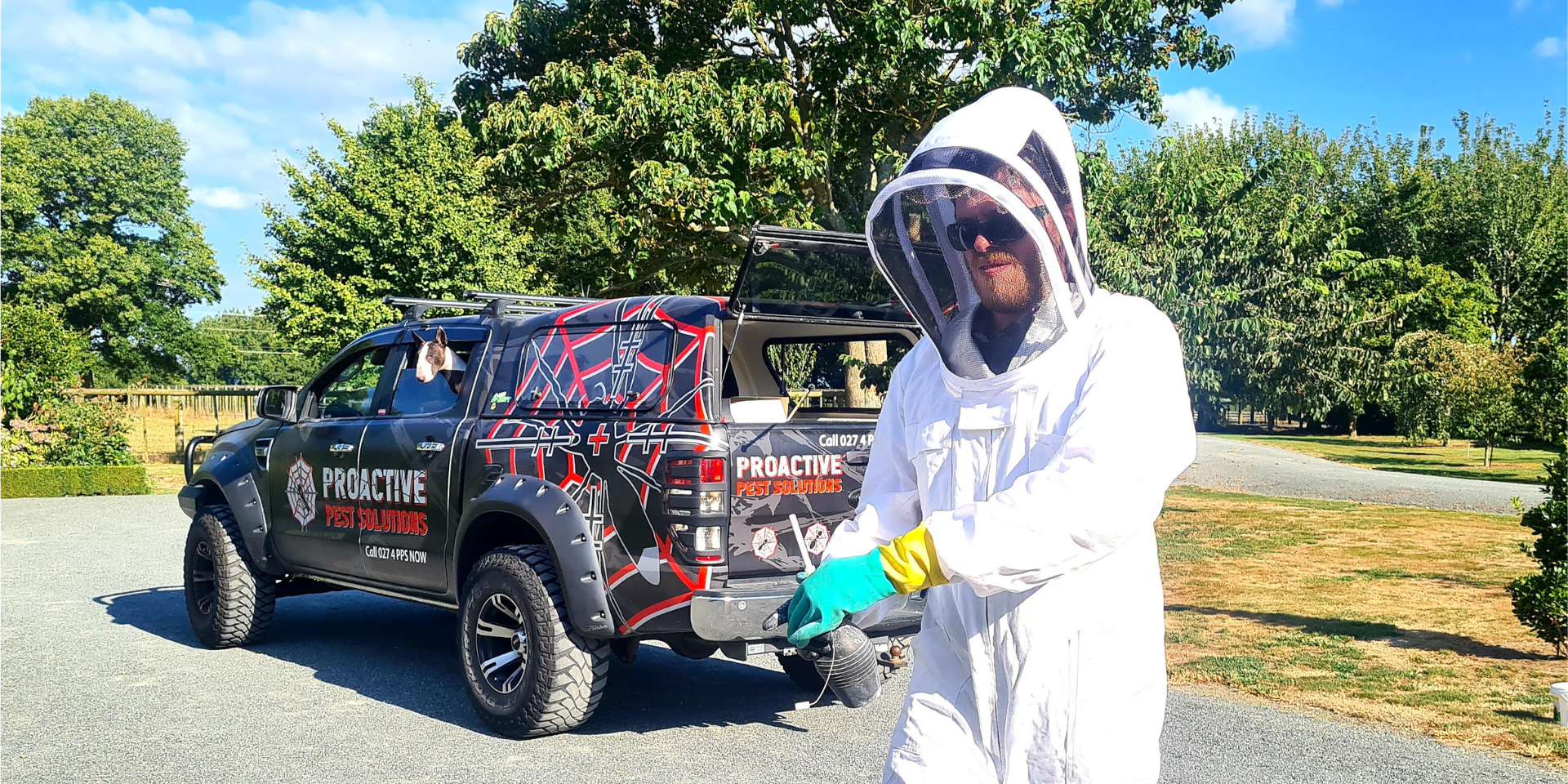
In this instance we do our best to catch and rehome bees with a local beekeeper.
Treating a wasp nest
Firstly, we need to know where the nest is located so that we can treat the nest directly.
Wasps are best treated later in the day if possible as they are returning from foraging.
Once treated the nest can become agitated, it is best to avoid the area for the rest of the day.
If activity persists after a couple of days, let us know as the treatment is guaranteed!
– We will return to retreat free of charge
Unfortunately if wasps are just foraging on a food source such as a tree or a bush this may not be a nest. There may be one nearby, you can try to follow foraging wasps back to find the nest – best completed later in the afternoon as they are all heading back to the nest for the night.
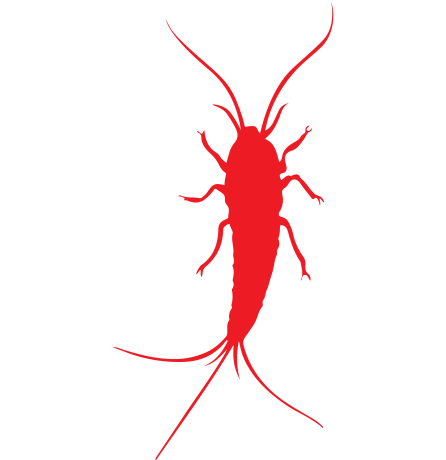
Silverfish are gray or silver in color.
They are nocturnal and prefer warm, dark, damp areas.
They feed on carbohydrates and can be damaging to books and wallpapers.
They can be a major pest in document storage rooms.
Monitoring & Treatment options are available and are tailored to your requirements.
Get in touch with the team to find out how we can help today.